Ebook · Volume 1 · 5 films
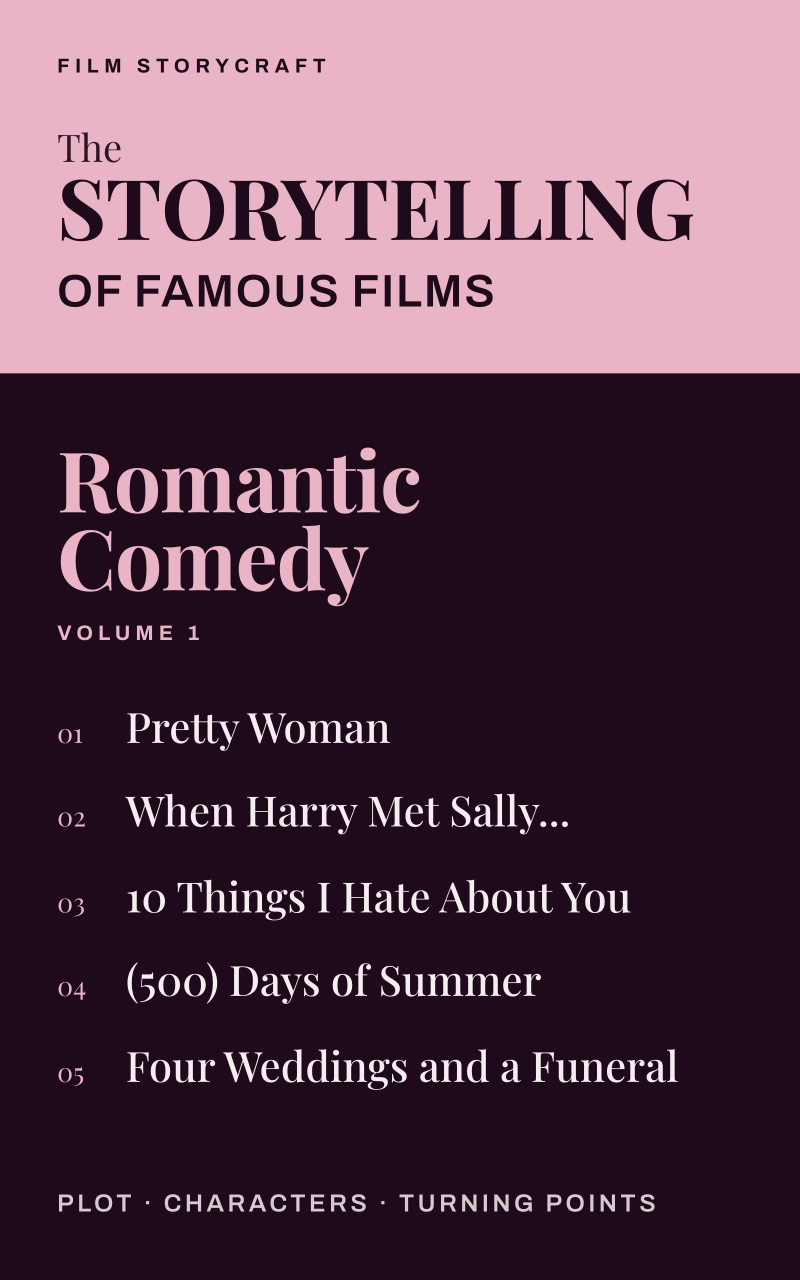
Romantic Comedy
Why do we wait so long for Harry and Sally to choose each other?
Pretty Woman · When Harry Met Sally... · and 3 more
Essential, cookie-free statistics remain active. The advertising pixel starts only if you choose to enable it.
The movies, genre by genre
Characters, dialogue, and plot twists, explained through five films per volume. For people who love movies and for anyone who wants to write their own stories.
Ebooks in PDF and EPUB, no DRM
Each volume stands on its own.
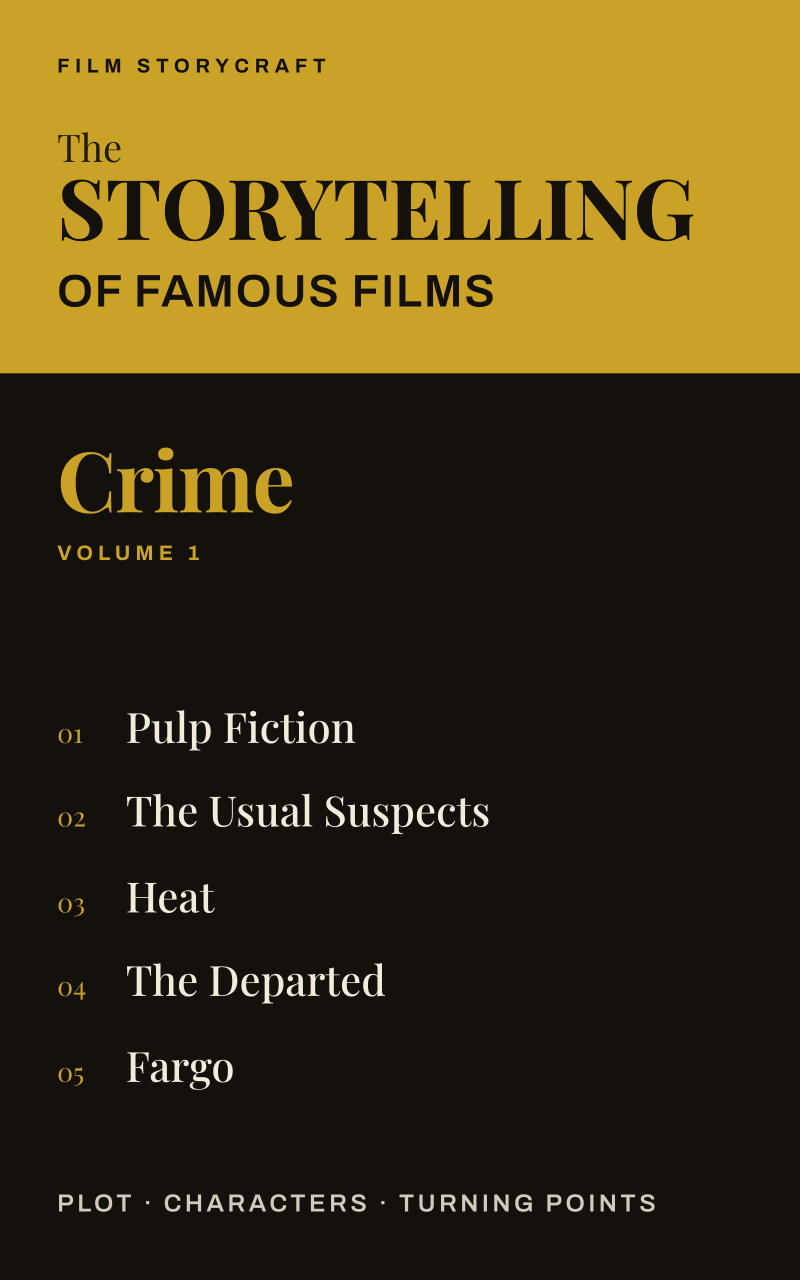
31 volumes15 genres155 films
Your starting point
Nine volumes to start withFour volumes to start with
Ebook · Volume 1 · 5 films
Why do we wait so long for Harry and Sally to choose each other?
Pretty Woman · When Harry Met Sally... · and 3 more
Ebook · Volume 1 · 5 films
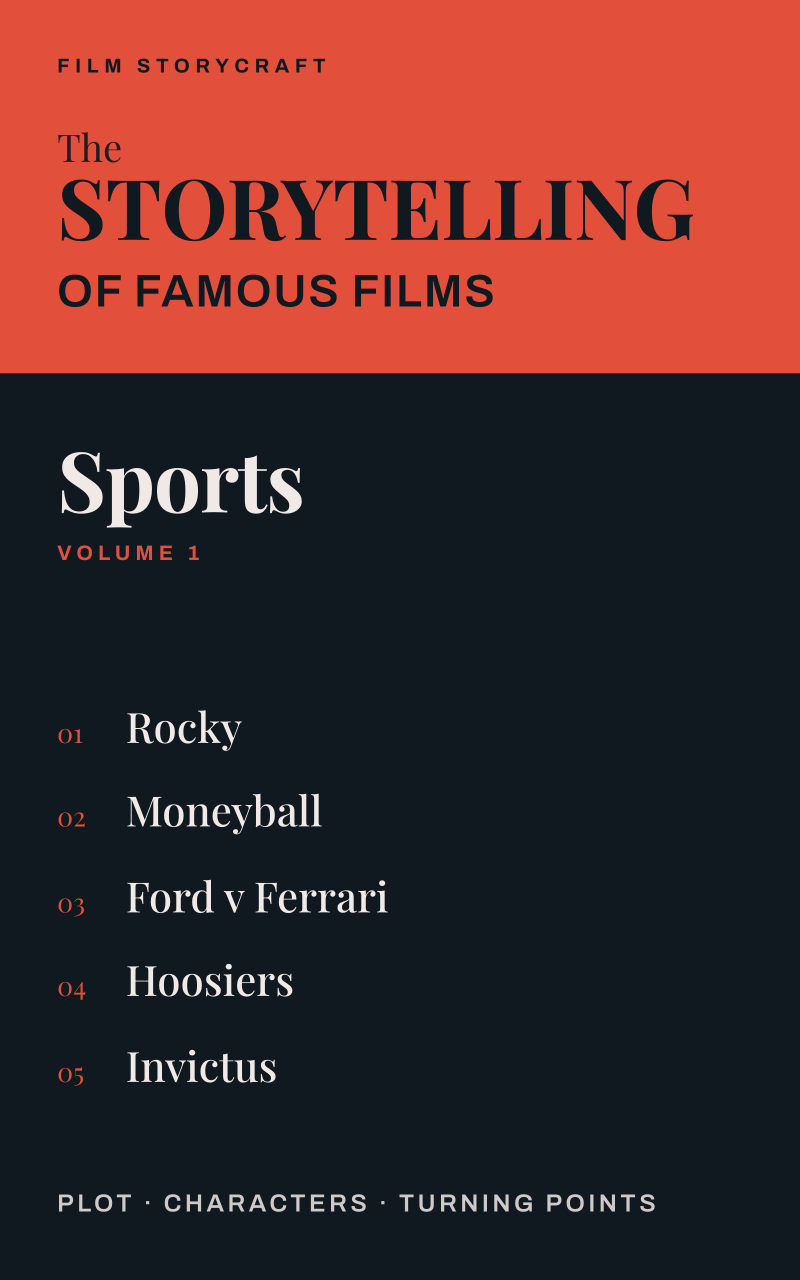
What makes us root for Rocky before the fight even starts?
Rocky · Moneyball · and 3 more
Ebook · Volume 1 · 5 films
Why do the three out-of-order stories of Pulp Fiction never lose us?
Pulp Fiction · The Usual Suspects · and 3 more
Ebook · Volume 2 · 5 films
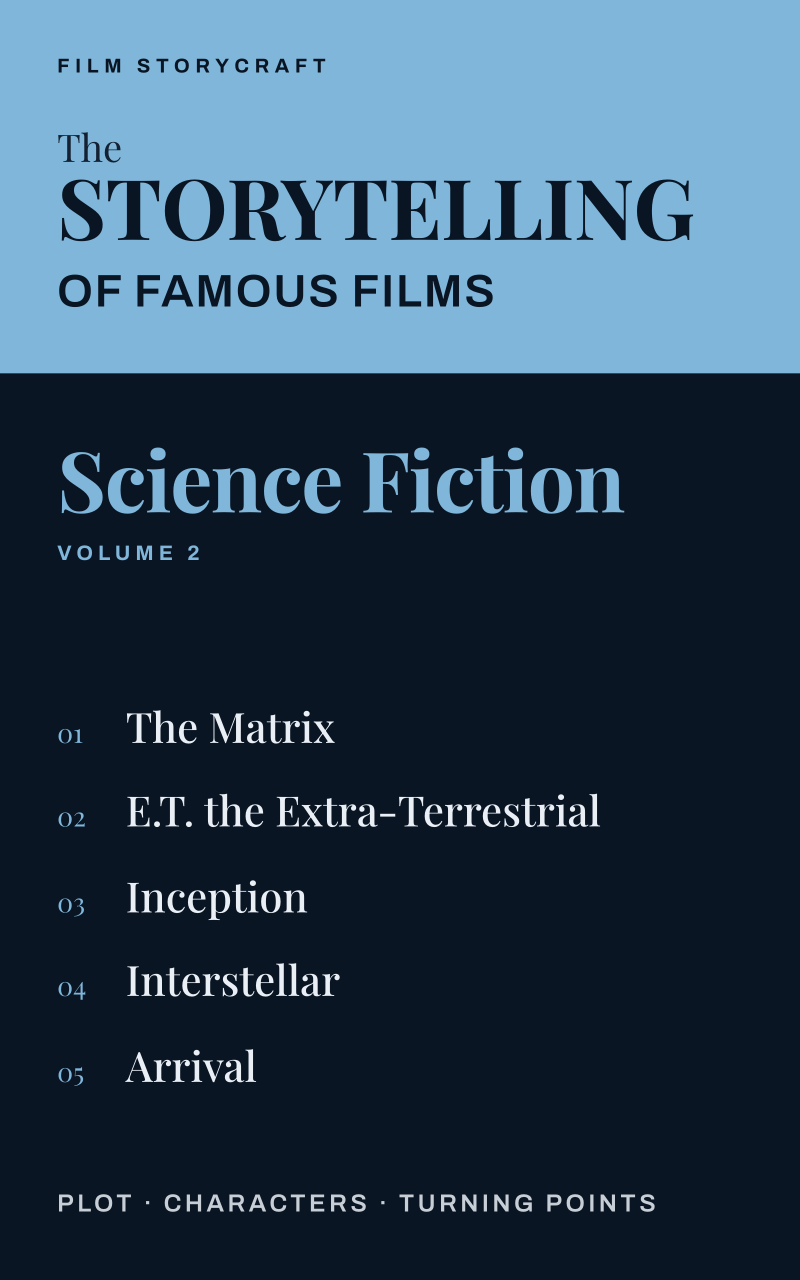
What happens right at the midpoint of The Matrix, and why does it change everything?
The Matrix · E.T. the Extra-Terrestrial · and 3 more
Ebook · Volume 2 · 5 films
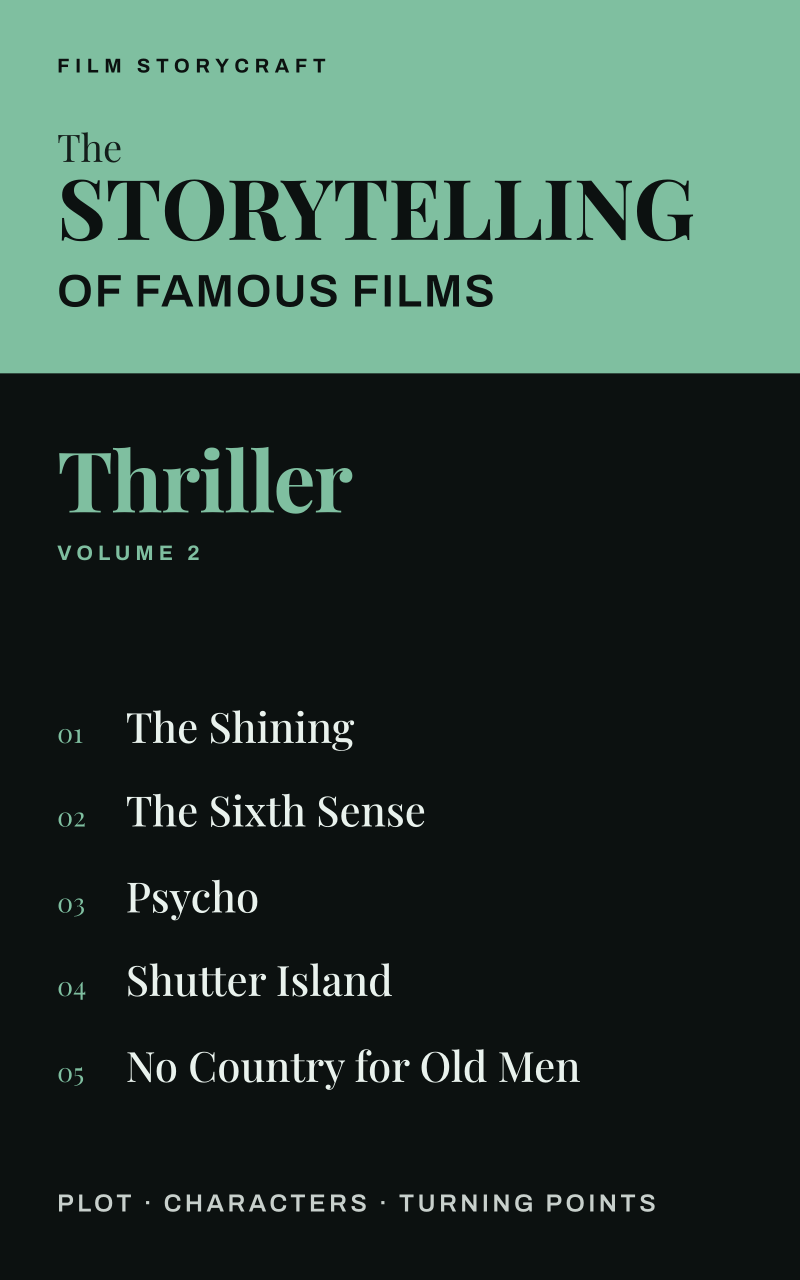
Why is Psycho still frightening, sixty years on?
The Shining · The Sixth Sense · and 3 more
Ebook · Volume 1 · 5 films
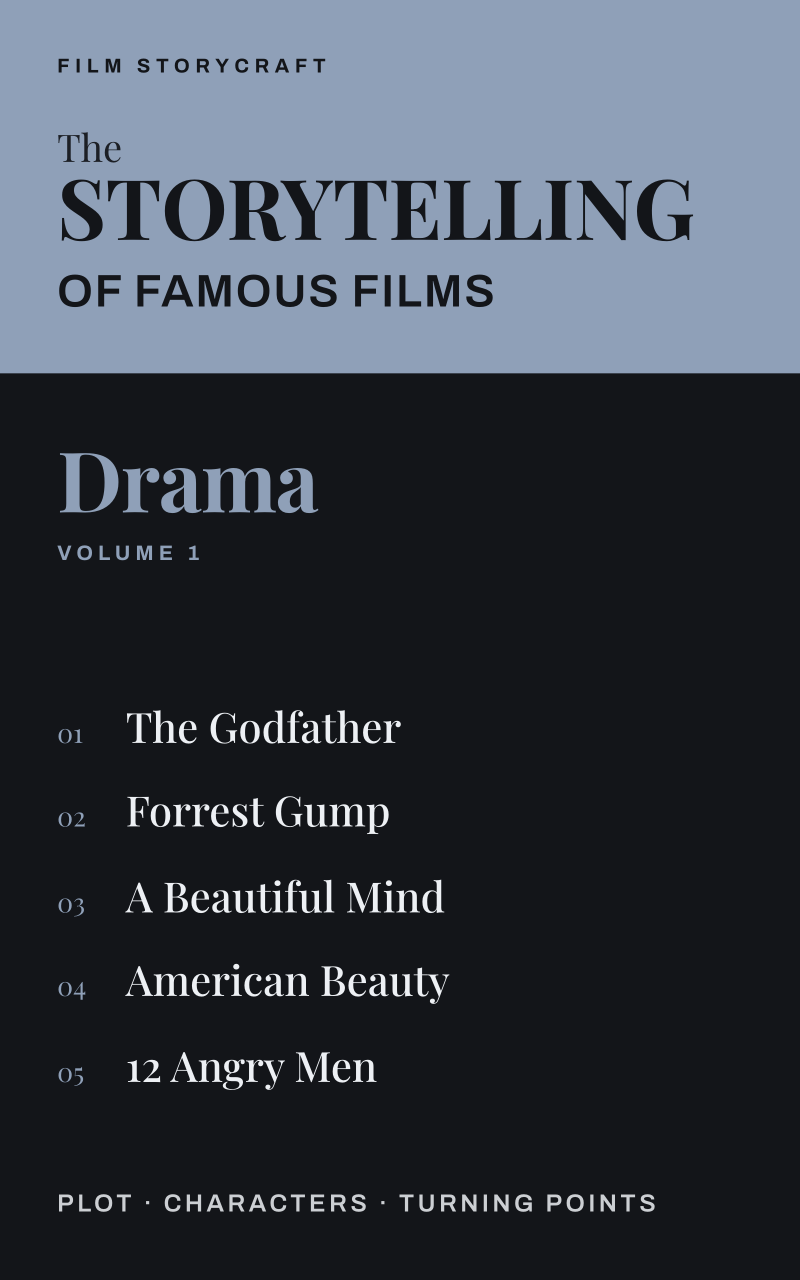
Why, in The Godfather, do we root for a man we shouldn't love?
The Godfather · Forrest Gump · and 3 more
Ebook · Volume 1 · 5 films
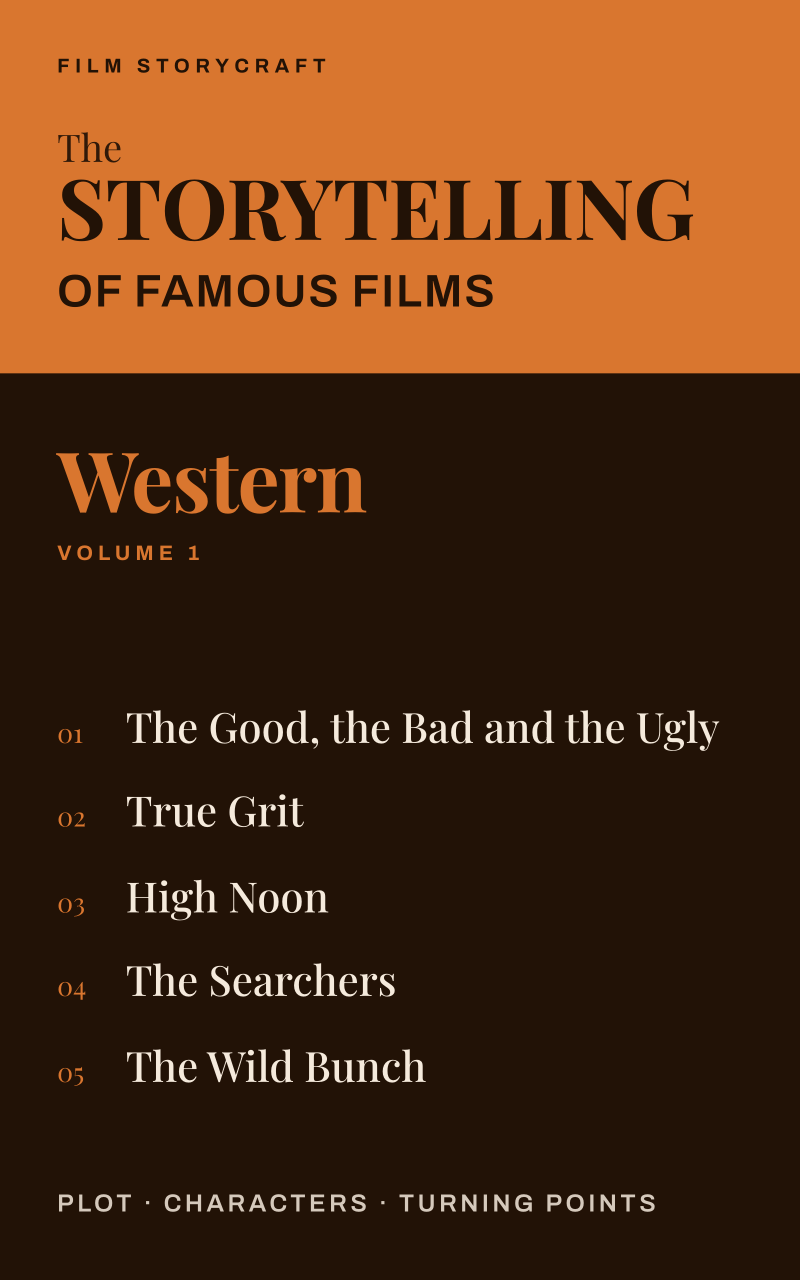
How does a clock keep us on the edge of our seats in High Noon?
The Good, the Bad and the Ugly · True Grit · and 3 more
Ebook · Volume 2 · 5 films
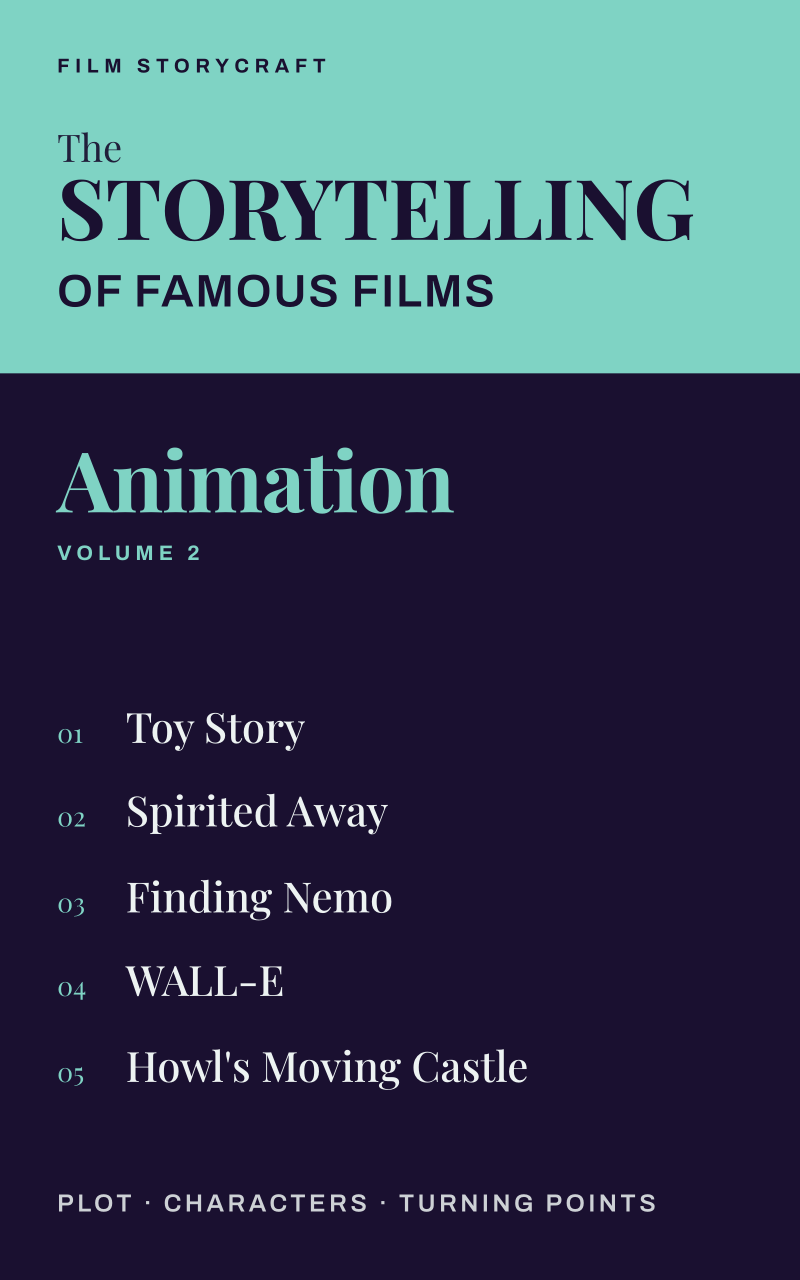
Why does the world of Spirited Away feel real, even though it's impossible?
Toy Story · Spirited Away · and 3 more
Ebook · Volume 1 · 5 films
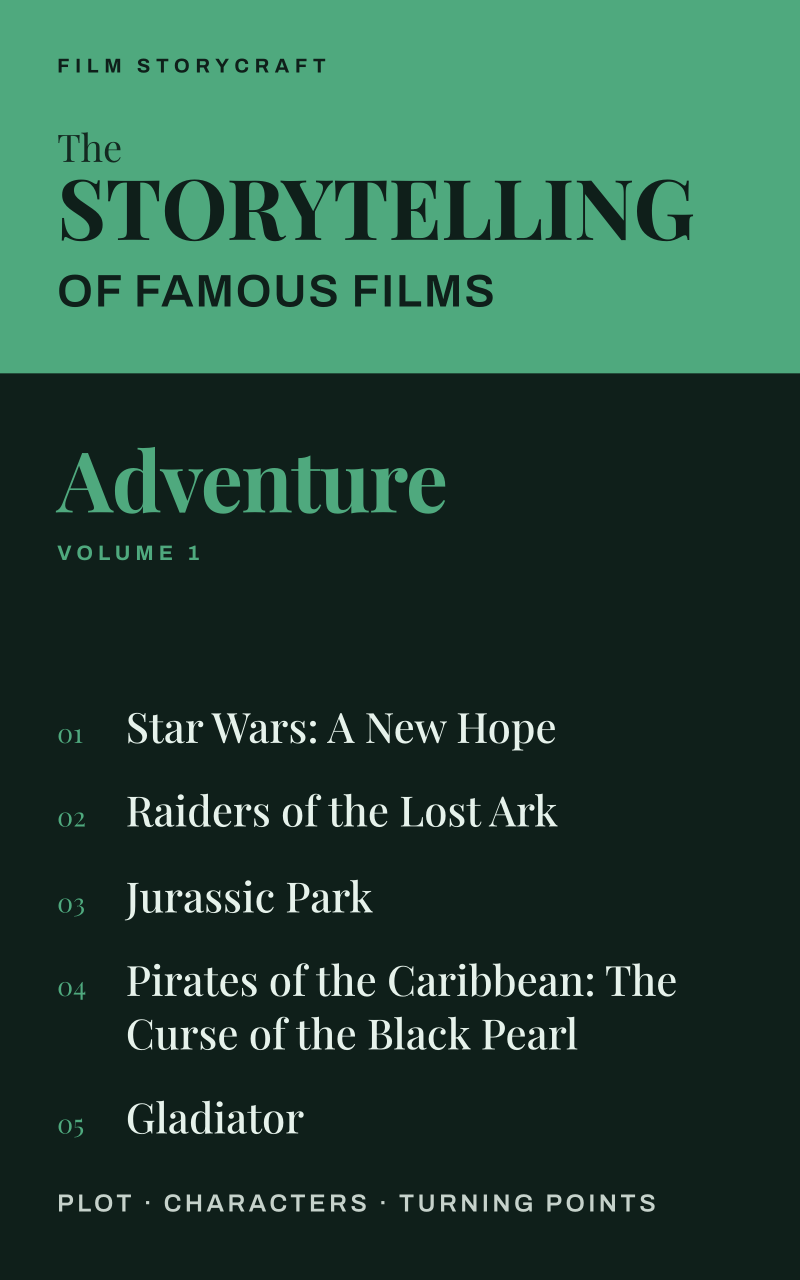
Why is the first dinosaur in Jurassic Park the one we can't see?
Star Wars: A New Hope · Raiders of the Lost Ark · and 3 more
A first read, right here
The same theme in two films from the same volume. See how the writing choices change.
When Harry Met Sally...
Dialogue as conflictNearly every conversation in this film is a micro-conflict. Harry and Sally do not speak simply to exchange information. They speak to win. Each defends a worldview, and their verbal clash generates narrative energy. The technique lies in giving every character a strong opinion and putting them at odds over everything, even the small things.
Pretty Woman
What the words concealThe technique lies in having the characters speak about money so that they can actually speak about respect and desire, while subtext does all the work that explicit words would spoil. The audience understands that it is watching courtship precisely because neither character calls it that.
Why read the series
Comparing several films helps you see how a storytelling choice changes from one story to the next. Each volume walks you through the comparison.
You can start with one book and build your library around the genres you care about.
The thread that ties the five films together, through their similarities and differences.
A shared structure to track characters, conflicts, and storytelling choices.
Key concepts revisited through examples from the films you have just read about.
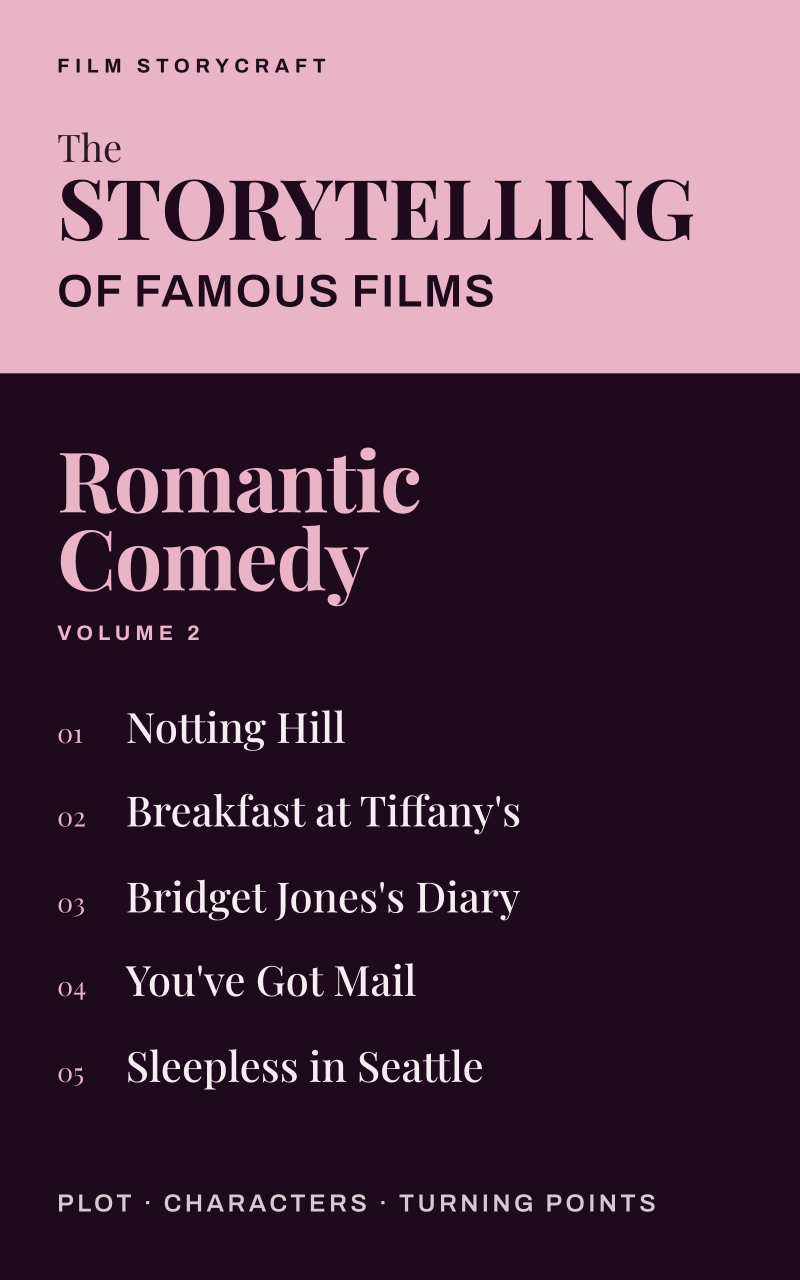
To go deeper into a genre
2 volumes · 10 films · PDF + EPUB
Prices include tax.
Explore the collectionBefore you start
Have a question about the project?
Write to us
Start with the film or genre you like best. Each volume stands on its own: the number tells the volumes apart and does not indicate a level of difficulty.
The series is also designed for people who love movies and want to understand how their stories are built. If you write, you can use the analyses as examples to draw questions and ideas from for your own work.
You receive digital files only, no printed book. Right after payment you download the PDF and the EPUB in the language edition you chose; you also get an email with the download links, and you will find the files in your personal library, ready to download again whenever you want. The PDF keeps the book's layout; the EPUB adapts the text to your reading app. Each volume includes the introduction to the genre, the five analyses, and the comparative glossary.
Yes. To explain how the stories are built, the analyses also discuss endings and plot twists. If you want to keep the surprise, watch the films you're interested in first.